
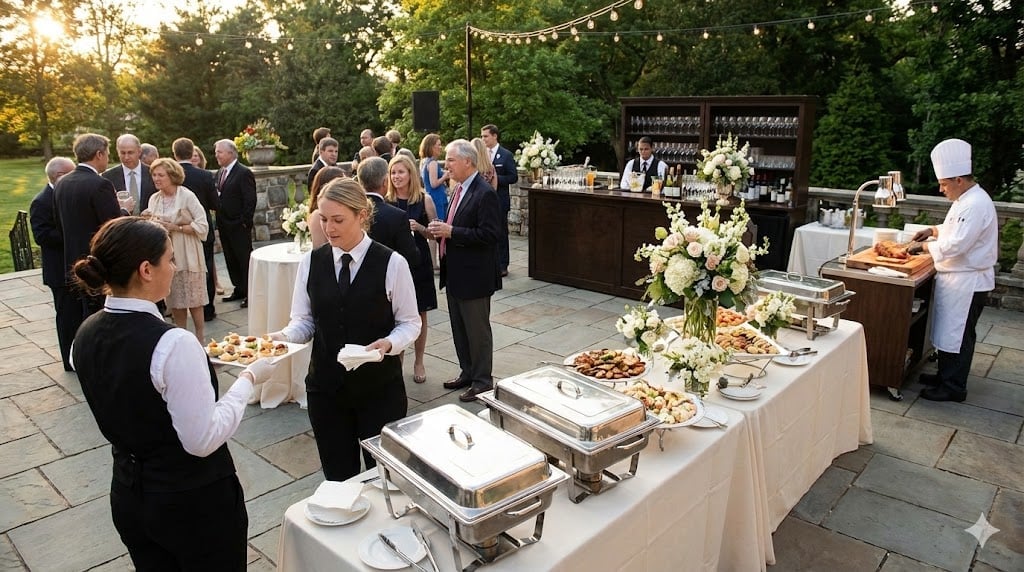
Full-service catering takes the logistics off your plate and delivers a complete event solution — a single partner that handles kitchen prep through on-site management. This guide explains what a full-service package includes, menu-planning tips, staffing roles, and how it elevates weddings, corporate functions, and social celebrations.
As the catering industry adapts to new technology and a growing event market, full-service offerings have become broader and more sophisticated.
Modern Catering Management & Event Market Expansion
Updated to highlight sustainable practices, digital menu and proposal tools, new catering software, and the broader reach of the events market. These developments have broadened what “full service” can include in today’s events.
What Is Full-Service Catering — Core Services Explained
Full-service catering goes beyond delivery: it pairs menu design, food production, trained staff, and full setup and teardown to create a seamless guest experience. As a dedicated full-service catering company, we stay on-site to run service and resolve issues so hosts can focus on their guests.
Growing expectations and more complex event formats have expanded the skills required of modern catering and event teams.
Catering & Event Professionals: Evolving Roles & Market Trends
As face-to-face events have become a major private-sector industry, catering has become a top budget item. Clients expect more and also watch costs closely, so responsibilities for caterers and planners have broadened and overlapped. Industry leaders now use the term “catering and events” to reflect these changing roles and the wider set of services professionals provide.
A competency model for catering and event professionals using a modified Delphi technique.
Key Components of a Full-Service Catering Package
A full-service package typically includes several core elements:
- Menu Planning: Customized menus that reflect your event, guest needs, and taste preferences.
- Food Preparation: Chef-crafted dishes made to order and plated for presentation.
- Staffing: Trained servers, chefs, bartenders, and coordinators who keep service smooth.
- Setup and Cleanup: Full management of the event space — from tables and linens to post-event breakdown.
These elements combine to deliver a cohesive dining experience that feels effortless to hosts and guests.
Full-Service vs. Drop-Off Catering: What’s the Difference?
Drop-off catering means food is delivered and left on-site. Full-service means the caterer stays to set up, serve, troubleshoot, and clean — producing a more polished, worry-free experience and letting hosts enjoy the event.
Menu Planning & Customization: How It Elevates Your Event
Thoughtful menu planning shapes offerings around dietary needs, guest preferences, and the event’s tone, making food feel intentional and memorable.
Careful menu design aims to create satisfying, memorable dining moments tailored to each guest.
Event Catering: Creating Memorable Food Experiences
The role of food in events has grown, and successful caterers focus on crafting memorable, holistic dining experiences that boost attendee satisfaction.
Event catering: enhancing customer satisfaction by creating memorable, holistic food experiences, A Steffen, 2020
Typical Dietary Options and Accommodations
- Vegan & Vegetarian: Well-balanced plant-based dishes that please meat-free guests.
- Gluten-Free: Options safe for guests with gluten sensitivities or celiac disease.
- Allergy Awareness: Clear ingredient handling and alternatives to protect guests with common allergens.
Offering a range of choices helps every guest enjoy a thoughtful, appropriate meal.
How Seasonal and Customized Menus Are Created
Seasonal and custom menus come together through collaboration and smart sourcing. Caterers match flavors, themes, and ingredient availability and use creative substitutions when needed. Common steps include:
- Local Sourcing: Using fresh, local produce when possible to boost flavor and sustainability.
- Menu Flexibility: Adjusting dishes for seasonal availability and special requests.
- Client Collaboration: Regular conversations to ensure the menu reflects your vision.
This process produces menus that feel personal and taste their best.
Staffing & Event Support Included in Full-Service Catering
Professional staffing keeps timelines, service, and operations running so guests enjoy a smooth event and hosts can relax.
Essential Catering Roles
Typical roles you’ll see on event day include:
- Chefs & Cooks: Prepare and plate the menu to spec.
- Servers & Bartenders: Deliver friendly, timely service and manage the bar flow.
- Event Coordinators: Oversee logistics so the timeline and setup run as planned.
How Staffing Improves Guest Experience and Event Flow
Trained staff speed service, engage politely with guests, and handle behind-the-scenes logistics. If issues arise, staff manage them so you don’t have to. For specific questions or to discuss staffing needs, contact Entrees Unlimited, and we’ll outline the right team for your event.
Benefits of Choosing Full-Service Catering
Hiring a full-service caterer reduces stress and ensures consistent execution. Professionals coordinate suppliers, timing, and service details so your event looks and feels put together.
How Full-Service Catering Reduces Stress and Ensures Professionalism
Full-service catering hands logistics to experienced pros: clear on-site management from setup through cleanup, executed timelines, and staff trained to handle service and minor emergencies. The result is peace of mind for hosts and a professional experience for guests.
Value for Weddings, Corporate Events, and Social Gatherings
Full-service catering adds specific value depending on the event:
- Weddings: Attention to timing, presentation, and detail to create a memorable celebration.
- Corporate Events: Polished service that supports your company’s image and networking goals.
- Social Gatherings: Lets hosts enjoy time with family and friends without the burden of managing food and service.
Choosing full-service catering raises the quality of your event while freeing you to focus on guests and the occasion itself.
| Component | Description | Benefit |
|---|---|---|
| Menu Planning | Tailored menus to fit event needs | Personalized dining experience |
| Staffing | Professional servers and chefs | Enhanced guest experience |
| Setup and Cleanup | Complete management of event space | Stress-free hosting |
What types of events are best suited for full-service catering?
Full-service catering works well for weddings, corporate functions, and social events where hosts want a seamless dining experience. It’s ideal whenever service, timing, and presentation matter or when you’d rather enjoy the day than run it.
How can I choose the right catering service for my event?
Define guest count, budget, and must-have services. Read reviews, ask for references, and schedule tastings. Confirm the caterer’s experience with similar events and their flexibility on menu changes, staffing, and service style.
What should I consider when planning a menu for my event?
Consider dietary needs (vegetarian, vegan, gluten-free), seasonal ingredients, and the event’s tone. Offer a balance of appetizers, mains, and desserts and choose dishes that hold well in your chosen service style while keeping budget in mind.
How far in advance should I book a full-service catering service?
Book as early as possible — generally three to six months ahead for popular dates. For large weddings or busy seasons, earlier booking gives more menu and staffing options and time to finalize logistics.
What are the typical costs associated with full-service catering?
Costs vary by event size, menu complexity, and location. A typical range runs from roughly $50 to $150 per person and usually includes food, staff, and basic equipment. Specialty items or premium requests can add to the total.
Can full-service catering accommodate last-minute changes or requests?
Many caterers try to accommodate late changes, though flexibility depends on timing and the request. Communicate changes promptly; major menu or staffing shifts are harder close to the event. Planning contingencies ahead of time helps ensure a smooth outcome.
Conclusion
Full-service catering delivers a polished, worry-free event through smart menu planning, trained staff, and coordinated execution. When you choose a full-service partner, you gain time, consistency, and a better experience for you and your guests. Ready to see how our team can bring your next event to life? Contact us to discuss your vision and get started.
Get started with the best catering services and prepared meals in San Jose! Contact us today to discuss your vision and let us handle the details. Call us at 408-280-0910 or send us a message here and we’ll get back to you ASAP to start planning your perfect menu.