
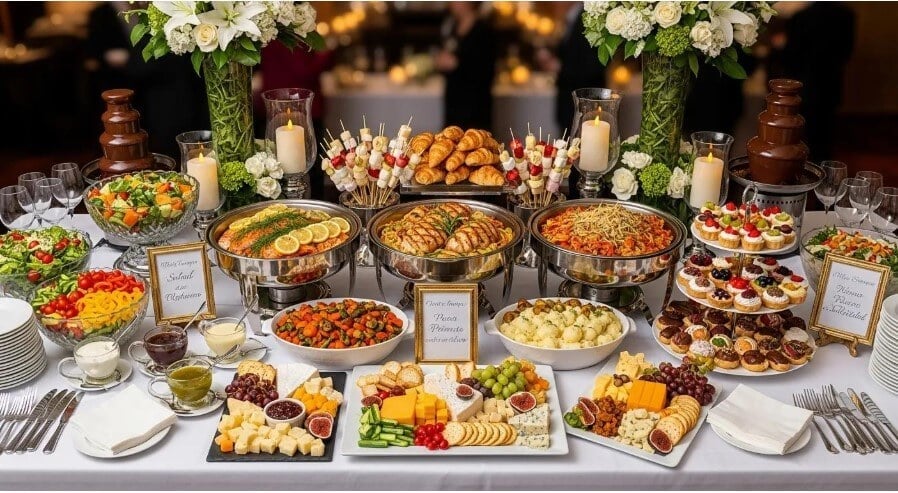
Choosing the right social catering service directly affects guest experience and the overall success of your event. This guide outlines the practical factors to consider—menu selection, pricing, quality, and logistics—so you can select a caterer that meets your event requirements and budget. Many hosts struggle to balance culinary expectations with cost; understanding these elements will help you make informed decisions. We review corporate catering options, menu variety, pricing approaches, and quality and logistical considerations.
Corporate Catering Options
Corporate catering covers services for business events ranging from formal conferences to informal staff gatherings. Recognising the different service models is essential when selecting a provider. Typical options include full-service catering, where the caterer handles preparation, service, and cleanup, and drop-off catering, which delivers prepared food without on-site staff.
Menus for corporate events usually feature a range of appetizers, main courses, and desserts designed to suit varied tastes. Addressing dietary restrictions is a practical necessity to ensure all guests have suitable options. Attention to these details improves guest satisfaction and supports your organisation’s professional image.
When choosing between service models, consider the size and tone of the event, venue capabilities, and the level of service you want to present. Full-service models are often chosen for events where presentation and timing are priorities, while drop-off or buffet options may suit informal meetings or smaller budgets. Think about whether you need on-site staff for plating and clearing, whether the venue has suitable kitchen facilities, and how the service style will influence guest flow and networking opportunities.
Menu Selections
A carefully chosen menu elevates an event and creates a lasting impression. Match food selections to your event theme and guest profile to ensure the menu complements the occasion.
Understanding consumer preferences and the impact of food quality is essential when crafting event menus.
Consumer Preferences & Food Quality in Catering
This study analyses factors that influence consumer preferences in selecting food processing services, using a case study of Tiara Catering by Yanti Ayub in Banyumas Regency. The results indicate that social media and food quality significantly influence consumer preferences, while income, price, and social recommendations do not show a significant effect. These findings suggest that promotional strategies via social media and improvements in food quality are key factors in attracting and retaining customers.
Factors Influencing Consumer Preferences in Choosing Food Catering Services for Weddings (A Case Study at Tiara Catering by Yanti Ayub), DS Darmansyah, 2025
Offering diverse menu options allows you to meet dietary preferences and restrictions. Interactive stations—such as live cooking or build-your-own meals—increase guest engagement and create memorable moments. Including international cuisines broadens appeal and supports an inclusive event environment.
Practical menu choices also include clear dish labelling and portion control to reduce waste and avoid confusion. Decide early whether plated service or buffet will better suit seating arrangements and presentation goals; plated meals offer a formal feel while buffets and stations encourage mingling. When planning for diverse audiences, prioritise a balance between familiar comfort dishes and one or two distinctive items that tie to the event theme.
Creating a memorable, well-rounded food experience is central to improving customer satisfaction.
Creating Memorable Food Experiences in Event Catering
The study examines how event caterers can create memorable and holistic food experiences to improve customer satisfaction in the event industry.
Event catering: enhancing customer satisfaction by creating memorable, holistic food experiences, A Steffen, 2020
Entrees Unlimited specialises in diverse menu options with an emphasis on quality preparation and streamlined ordering. Their social catering service is designed to help you select menus that align with your event theme and guest preferences.
When arranging tastings and final menu selections, ask for suggested pairings and portioning guidance so you can easily scale dishes for your guest count. Discuss lead times for specialty items and any seasonal changes that may affect availability; good caterers will suggest suitable substitutions in advance and outline ordering cut-offs to avoid last-minute disappointments.
Pricing Strategies
Understanding catering pricing is essential for accurate budgeting. Prices are affected by service type, menu complexity, staffing and guest count.
To manage costs, consider these practical steps:
- Request Itemized Quotes: This clarifies costs and facilitates comparison between caterers.
- Consider Off-Peak Times: Booking during less busy periods can reduce prices.
- Limit Alcohol Options: A restricted beverage selection can lower costs without reducing event quality.
Also, review any additional service fees or surcharges. Clear pricing and transparency will help you avoid unexpected expenses and keep the event within budget.
Compare package pricing (where rentals and staffing are included) against à la carte pricing to understand where savings may exist. Ask about minimum guest counts, overtime charges for staff, and whether gratuities or service charges are added separately. When negotiating, be specific about what is included—linens, tableware, service hours—and ask for written confirmation of all inclusions to avoid ambiguous or hidden costs.
| Service Type | Price | Features |
|---|---|---|
| Full-Service Catering | Varies | Includes food preparation, serving staff, and cleanup |
| Drop-Off Catering | Varies | Pre-prepared meals delivered to the venue |
| Buffet Style | Varies | Guests serve themselves from a variety of dishes |
This table summarises common catering service types and their core features to support an informed selection aligned with your event needs.
Quality Considerations
Catering quality influences guest perception and event success. Key indicators include ingredient freshness, dish presentation, and staff professionalism.
When assessing potential caterers, evaluate the following:
- Client Testimonials: Past client feedback offers insight into reliability and service standards.
- Food Sampling: Tastings allow you to verify food quality before committing.
- Service Reputation: Investigate the caterer’s track record and industry standing to assess dependability.
Selecting a caterer with a documented reputation for quality will elevate your event and leave a favourable impression on guests.
Use a simple quality checklist when vetting providers: confirm that food safety and handling procedures are explained, ask about sourcing for key ingredients, and request references from recent events similar in size and style to yours. Also check whether the caterer has contingency plans for staffing or supply issues—reliable suppliers will outline backup measures and communicate transparently about potential risks.
Logistics and Planning
Clear logistics and careful planning are essential for a smooth catering experience. Establish communication channels with the catering team, confirm guest counts, and document dietary requirements.
Set planning timelines well in advance to allow for menu adjustments and operational preparations. Verify that the caterer’s delivery and setup procedures are reliable to prevent last-minute issues on the event day.
For inquiries or to discuss specific event requirements, you can contact Entrees Unlimited directly for personalised assistance and a detailed catering quote.
Build a simple planning timeline: begin vendor selection several months ahead for larger events; agree menus and any custom requirements several weeks before the date; and confirm final guest numbers and special diets a few days prior. On the day, provide the caterer with clear arrival instructions, power and access details, and an on-site contact to handle coordination. Advance communication about parking, loading docks and venue restrictions reduces risk and keeps the event on schedule.
What Are the Key Factors to Consider When Selecting a Social Catering Service?
Several practical factors determine the suitability of a social caterer. These include menu flexibility, clear pricing, and proven service quality.
- Menu Options and Dietary Accommodations: Confirm the caterer can provide a varied menu that addresses dietary needs.
- Pricing Transparency: Choose a caterer who provides clear, itemised pricing to prevent surprises.
- Service Quality and Customer Reviews: Review testimonials and reputation to assess reliability.
How Does Service Quality Impact Your Event Experience?
Service quality directly affects event flow and guest satisfaction. Professional staff, punctual service, and attention to detail ensure a seamless experience. A well-trained team anticipates needs and addresses issues promptly, keeping the event on schedule.
Examining service quality from the customer perspective yields useful insights into the elements that produce successful events.
Customer Perspective on Catering Service Quality
The thesis examines service quality in relation to cleaning, catering and security from both the customer perspective (Chapters 5 and 6) and the supplier perspective (Chapter 7).
Service quality indicators for business support services, 2010
Why Is Menu Diversity Essential for Social Events?
Menu diversity ensures that guests with different tastes and dietary needs are accommodated. Providing a range of options enhances satisfaction, encourages engagement, and promotes an inclusive atmosphere.
Which Corporate Catering Options Best Suit Your Business Event Needs?
Select the catering model that matches the event format. Full-service catering suits formal events where service and presentation matter; drop-off catering is appropriate for casual or budget-conscious meetings.
What Are the Benefits of Customized Corporate Menus?
Customized corporate menus allow tailored dietary accommodations and alignment with event objectives. Working with your caterer to design a bespoke menu can reinforce the message of your event and improve the guest experience.
How to Align Catering Services with Corporate Event Goals?
Align catering with event goals by defining the event purpose and understanding attendee preferences. Collaborate with your caterer to create a menu that supports the desired tone and outcomes.
How Can You Customize Party Catering Menus to Accommodate All Guests?
Customising party menus begins with identifying dietary needs and offering a balanced selection. Ensure vegetarian, vegan, and gluten-free options are available and clearly labelled to accommodate all guests.
What Dietary Restrictions Should Be Addressed in Menu Planning?
Address common dietary restrictions such as allergies, vegetarianism, and gluten intolerance. Use clear dish labelling and maintain open communication with guests to confirm suitable choices.
How to Incorporate Diverse Cuisine Options for Social Gatherings?
Include dishes from different culinary traditions to broaden appeal and encourage guest interaction. A varied menu supports diverse tastes and enhances the overall event experience.
What Are the Typical Pricing Structures and Budgeting Tips for Event Catering Services?
Typical pricing reflects service level, menu complexity, and guest count. Request detailed quotes and compare inclusions to manage your budget effectively.
How to Compare Catering Service Pricing Effectively?
Define your budget and guest numbers, then obtain itemised quotes from several caterers. Compare what is included—staffing, service times, rentals—to arrive at an accurate comparison.
What Are Cost-Saving Strategies Without Compromising Quality?
Cost-saving strategies include selecting buffet service, limiting alcohol choices, and scheduling off-peak dates. These measures can reduce expense while maintaining food and service quality.
How Does the Ordering Process and Delivery Options Affect Your Catering Experience?
The ordering process and delivery options influence reliability and convenience. Early bookings, flexible menus, and responsive customer service contribute to a smooth experience.
What Are the Advantages of Streamlined Online Ordering Systems?
Streamlined online ordering provides intuitive interfaces, customisation options, and order tracking. These features simplify planning and improve operational clarity for organisers.
How to Ensure Reliable Delivery and Setup for Your Event?
Secure reliable delivery and setup by booking in advance and confirming delivery windows and setup requirements with the caterer. Clear logistical instructions reduce the risk of delays.
Why Should You Consider Client Testimonials and Service Reputation When Choosing a Caterer?
Client testimonials and reputation offer practical evidence of a caterer’s reliability and problem-solving ability. Review balanced feedback to evaluate consistency and service standards.
How Do Client Reviews Reflect Catering Service Reliability?
Client reviews provide specific examples of service quality and food performance. Assessing multiple reviews gives a clearer picture of a caterer’s reliability and consistency.
What Role Do Case Studies Play in Evaluating Catering Providers?
Case studies demonstrate a caterer’s performance in real events and illustrate their approach to challenges. Reviewing case studies helps determine whether a provider can meet your requirements.
What Are the Latest Trends in Social Catering Services to Enhance Your Event?
Current trends that enhance events include sustainable sourcing, interactive food stations, and bespoke menu options that address diverse preferences.
How Is Sustainable Catering Influencing Menu Choices?
Sustainable catering emphasises local sourcing and plant-based options. These practices support environmental goals and appeal to health-conscious attendees.
What Technology Innovations Improve Catering Service Efficiency?
Technology such as online ordering platforms and real-time tracking improves operational efficiency and customer communication, resulting in fewer service disruptions.
How to Request a Catering Quote and Finalize Your Social Catering Service Selection?
Request a catering quote by providing event details, researching suitable caterers, and asking for detailed estimates. This process clarifies options and supports a final decision.
What Information Should You Provide When Requesting a Quote?
Provide precise event information, including date, location, guest count, and menu preferences. Accurate details enable caterers to deliver realistic estimates and tailored proposals.
How to Evaluate and Compare Catering Proposals for Your Party?
Evaluate proposals by reviewing menu options, service inclusions, and pricing transparency. Select the proposal that best aligns with your event objectives and budget.
What Should I Look for in a Catering Contract?
Ensure the contract details services provided, itemised pricing, payment terms, cancellation policy, and liability insurance. Confirm staff numbers, setup and breakdown schedules, and any guarantees on food quality and service. A clear contract prevents misunderstandings and sets mutual expectations.
How Can I Ensure My Caterer Can Handle Dietary Restrictions?
Communicate dietary requirements during planning and request sample menus that include allergy-friendly, vegetarian, vegan, and gluten-free options. Ask about protocols to prevent cross-contamination. A reputable caterer will document procedures and accommodate special needs.
What Are the Benefits of Hiring a Local Catering Service?
Local caterers often source fresher ingredients and understand regional preferences, which can improve menu relevance. They may also have established venue partnerships that ease logistics. Choosing local suppliers supports the community and can streamline planning.
How Far in Advance Should I Book a Catering Service?
Book major events at least three to six months in advance, particularly during peak seasons. For smaller events, one to two months may suffice. Confirm the caterer’s booking policy to secure preferred menus and staff.
What Should I Expect During a Food Tasting Session?
A tasting session lets you sample proposed dishes to assess flavour, portioning, and presentation. Discuss adjustments and customisations at the tasting and provide clear feedback so the caterer can refine the final menu.
How Can I Incorporate Sustainable Practices in My Catering Choices?
Choose caterers who prioritise local, seasonal, and organic ingredients and who offer plant-based options. Ask about measures to minimise food waste and the availability of eco-friendly packaging. Sharing your sustainability objectives will help the caterer plan accordingly.
What Are Some Creative Catering Ideas for Social Events?
Consider interactive food stations such as build-your-own options or live cooking demonstrations to engage guests. Themed menus and curated food-and-drink pairings can elevate the experience. Including a range of international dishes broadens appeal.
Conclusion
Selecting the right social catering service can elevate your event and leave a lasting impression. Prioritise menu variety, transparent pricing, and proven service quality to meet dietary needs while maintaining budget control. Working with a reputable caterer improves guest satisfaction and supports your event objectives. For tailored assistance and to explore customised catering options, reach out to us today.
Before you finalise any agreement, compile a short checklist of must-have items—menu flexibility, clear contract terms, sample tasting notes, and contingency arrangements—and use that list during your final review of proposals. Taking these steps will reduce stress during planning and help ensure the food and service reflect the standard you expect for your event.