
Corporate events move quickly, and the right catering menu can make a measurable difference. Companies look for menus balancing variety, dietary inclusivity, and reliable execution. This guide outlines top corporate catering options—popular selections, ways to customize, and ordering best practices—so you can plan events that satisfy clients and teammates while running smoothly.
Most Popular Corporate Lunch Menus
For corporate lunches, consistent quality and variety are nonnegotiable. Popular selections combine hot and cold dishes and provide flexibility so everyone can pick what suits them. Businesses usually choose menus that are simple to customize and easy to serve across different group sizes.
Office Catering Ideas for Different Events
Different events call for different formats. Match the menu to the occasion with these practical ideas:
- Formal Dinners: A plated three-course menu—think grilled salmon or a seasonal roasted vegetable entrée with a refined dessert—creates a polished, memorable experience.
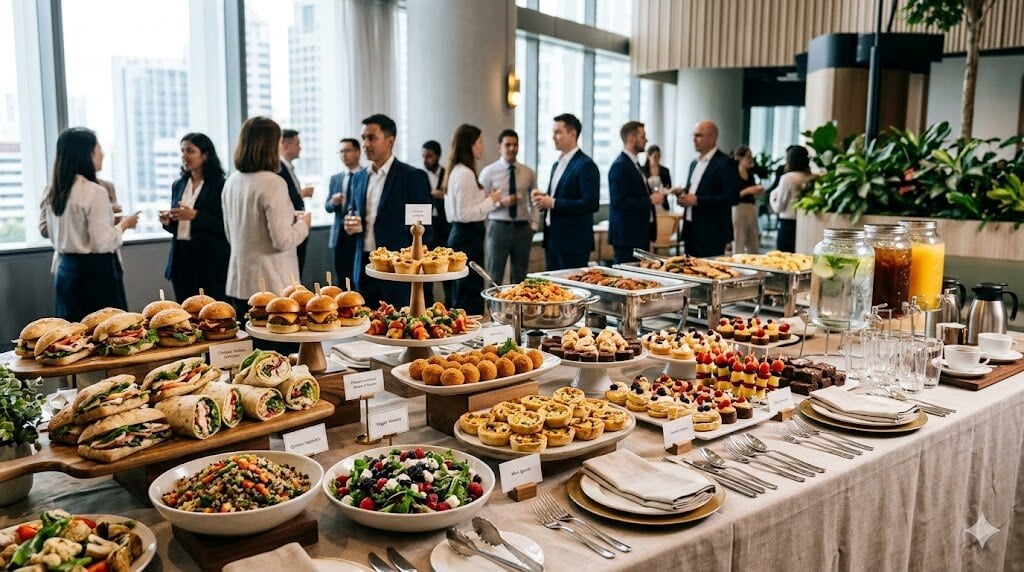
- Networking Events: Bite-sized items like sliders, mini quiches, and assorted canapés make mingling effortless and encourage conversation.
- Team Lunches: Buffet-style spreads featuring salads, sandwiches, and wraps give employees choice and keep the atmosphere relaxed and efficient.
These options suit varied tastes while improving the overall flow and feel of your event.
How Dietary Preferences Shape Menu Choices
Dietary needs directly influence menu planning. Consider these key areas when building your catering selection:
- Accommodating Dietary Restrictions: Include gluten-free, vegetarian, vegan, and allergy-aware dishes so every guest can enjoy the meal safely.
- Health-Conscious Choices: Lighter preparations and fresh ingredients appeal to attendees who prefer healthier options without sacrificing flavor.
- Guest Satisfaction: Thoughtful menus that reflect guests’ needs tend to increase satisfaction and support a successful event outcome.
Planning with these preferences in mind helps you deliver an inclusive, well-received dining experience.
How Businesses Can Customize Their Catering Menus
Customization lets you match the menu to your event’s goals, budget, and guest mix. Work with caterers to adapt portions, flavors, and service style to fit the occasion.
Benefits of Customizable Event Menus
Custom menus bring practical and experiential advantages:
- Dietary Accommodations: Tailored offerings ensure guests with specific needs are included without extra hassle.
- Enhanced Guest Satisfaction: When dishes reflect attendees’ preferences, the dining experience feels personal and deliberate.
- Stress Reduction for Hosts: A menu designed for your audience lets planners focus on logistics and guest experience rather than last-minute food fixes.
Flexible catering is an efficient way to deliver better outcomes for both hosts and guests. If you’d like a custom menu for your next gathering, reach out to Entrees Unlimited, and we’ll help plan options that fit your event.
How to Include Healthy Options Effectively
Adding healthy choices works best when it’s simple and visible. Use these strategies to make nutritious options a seamless part of your menu:
- Customizable Choices: Let guests build bowls or pick from clear, healthy alternatives to encourage balanced selections.
- Fresh, Seasonal Ingredients: Prioritize local and seasonal produce to boost flavor and nutrition.
- Feedback Loops: Collect attendee feedback to refine healthy offerings for future events.
Thoughtful, accessible, healthy options support wellbeing and are often appreciated by attendees.
What to Know About Ordering and Delivery for Professional Catering
Logistics matter as much as the menu. Clear timelines, communication, and coordination with your caterer help prevent issues on the day of the event.
How Far in Advance Should You Order?
Aim to place orders at least 48–72 hours before the event. That window gives caterers time to source ingredients and accommodate dietary requests. For peak seasons or large-scale events, book earlier to secure your preferred menu.
Best Practices for Smooth Ordering and Delivery
Use these practices to keep ordering and delivery efficient:
- Clear Communication: Share headcounts, dietary restrictions, timing, and setup needs up front so expectations are aligned.
- Early Booking: Lock in caterers and menu choices as soon as dates are confirmed to avoid last-minute limitations.
- Logistics Coordination: Confirm delivery windows, parking or loading instructions, and onsite setup to ensure timely service.
Following these steps helps the caterer deliver on time and keeps your event running smoothly.
What types of cuisines are popular for corporate catering?
Common corporate catering cuisines include Italian, Asian, Mediterranean, and American—all versatile and crowd-pleasing. Italian menus might feature pastas and antipasti; Asian selections can include sushi, stir-fries, and dumplings; Mediterranean options often center on shared plates and grilled items. Mixing styles satisfies broad tastes and introduces variety without complicating service.
How can businesses ensure food safety during corporate events?
Work with reputable caterers who follow local health codes and standard safety practices. Keep hot foods above 140°F and cold foods below 40°F, ensure staff follow proper hand hygiene and glove use, and label dishes clearly—especially those with common allergens—to help guests make safe choices.
What are some eco-friendly catering options for corporate events?
Eco-friendly choices include sourcing local ingredients, offering plant-forward menus, minimizing packaging, and using compostable or reusable serviceware instead of single-use plastics. These practices reduce waste and support sustainability goals while still delivering appealing food.
How can companies evaluate catering providers before making a selection?
Evaluate caterers by checking reviews and client testimonials, requesting sample menus and pricing, and arranging tastings when possible. Ask about customization, allergy handling, and logistical support to ensure the caterer can meet your specific needs and standards.
What role does presentation play in corporate catering?
Presentation shapes guests’ first impressions and can elevate a simple meal into a memorable experience. Thoughtful plating, colorful displays, and tidy service stations reflect professionalism and encourage guests to try new items—contributing to a positive overall impression of your event.
Are there any trends in corporate catering to watch for?
Current trends include a stronger focus on health-conscious options (plant-based and gluten-free), global flavor profiles, interactive food stations that let guests customize meals, and sustainable practices such as waste reduction and eco-friendly packaging. These trends align with broader corporate priorities around wellbeing and sustainability.
Conclusion
Selecting the right corporate catering menu means balancing variety, dietary needs, and dependable service. Customizable menus and clear logistics improve guest satisfaction and reduce stress for hosts. Use these guidelines to plan with confidence—and if you’re ready to streamline your next event, explore our catering services to find options that fit your goals and audience.