
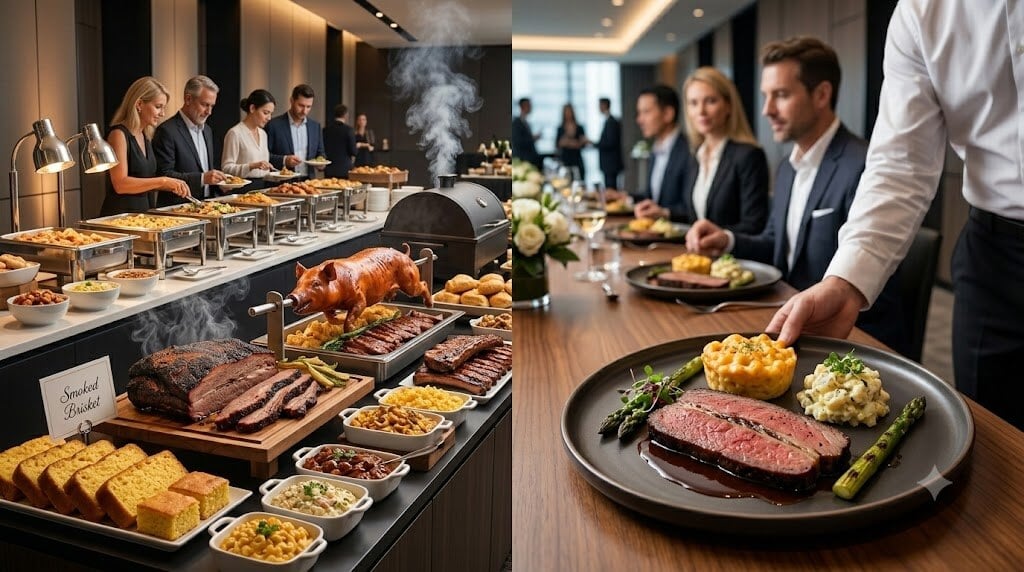
Catering choices shape the guest experience. Consider service style, menu selection, and how those elements align with your event theme and attendee expectations. This article compares buffet and plated BBQ catering, outlining each style’s characteristics, benefits, and suitability for corporate events.
This comparison highlights operational factors, guest interaction effects, and the overall impact on attendee experience. It also reviews menu customisation for dietary needs so planners can ensure all guests are accommodated. Throughout, the guidance is practical and designed to help event professionals choose the service style that meets logistical constraints and the desired atmosphere.
Comparison of Buffet and Plated BBQ Catering for Corporate Events
Choosing between buffet and plated BBQ catering influences guest satisfaction and logistics. Each style has distinct benefits and trade-offs: buffet supports self-service and a relaxed atmosphere, while plated service delivers a more formal, table-served experience with focused presentation.
Beyond atmosphere, the choice affects flow, staffing, timing, and the way dietary needs are managed. Planners should weigh how guests will arrive, whether there will be presentations or speaking slots during dining, and the likely movement patterns across the venue. These operational considerations often determine which service style will be most efficient and well received.
Advantages:
Buffet BBQ Catering:
Buffet BBQ catering offers flexibility and cost efficiency. It presents a broad range of menu options that can address diverse dietary needs, allows guests to dine at their own pace, and often speeds service for larger groups. This format supports mingling and informal networking while guests serve themselves.
Because food is stationed in one or more central areas, buffets can be configured to support traffic flow and encourage social interaction. Presentation techniques—such as clear labeling, separated allergen stations, and dedicated carving or grill stations—help maintain quality and reduce confusion. Buffets also allow for easier last-minute scaling of portions and substitutions when attendance fluctuates.
Plated BBQ Catering:
Plated BBQ catering provides a refined, attentive dining experience. Meals are served at the table with careful presentation, making this style well suited to formal business events. Plated service helps hosts control the dining flow, meet individual dietary needs, and present a cohesive, professional atmosphere.
Plated service places emphasis on timing and synchronized courses, which supports program schedules where speeches or award presentations require predictable pauses in dining. It also provides an opportunity for elevated plating and finishing touches performed by trained staff, delivering a polished impression that aligns with high-profile client meetings and formal dinners.
Suitability for Various Event Types:
Event type and tone determine which service style works best. Both buffet and plated catering are adaptable, but their suitability varies with the size of the gathering and the atmosphere you wish to create.
Consider whether the event is primarily social, programmatic, or a hybrid of the two. Social events that prioritise networking benefit from flexible dining that allows movement. Events with formal agendas typically require the order and predictability that plated service brings.
Buffet BBQ Catering:
Buffet service suits casual corporate occasions—team building, staff lunches, and networking mixers—where a relaxed atmosphere is desired. It encourages interaction, lets guests choose freely, and scales efficiently for larger groups without compromising variety.
For multi-session or staggered events, buffets provide the convenience of continuous availability, which is helpful when attendees arrive at different times or when breaks are flexible. Buffets can also be themed or segmented—such as separate stations for vegan, gluten-free, and regional BBQ styles—to showcase variety while keeping lines organized.
Plated BBQ Catering:
Plated service is appropriate for formal events such as company dinners, award ceremonies, and client meetings. Its structured approach supports a sophisticated tone, enables precise timing, and makes accommodating dietary restrictions straightforward.
Plated service also reduces decision friction for guests because the menu is typically pre-selected, allowing hosts to plan seating arrangements and ensure each guest’s needs are addressed. When presentation and a controlled ambiance are priorities, plated service supports a seamless guest experience and reinforces a professional environment.
Key Factors to Consider:
Consider the following factors that will influence your catering decision and the guest experience.
- Guest Interactivity: Buffet catering fosters a more casual environment where guests can interact more freely. Plated service limits movement but ensures a more refined dining experience.
- Service Style: Consider how you want to serve the meal and the level of formality you want to establish at the event. Buffets can appear more relaxed, while plated service tends to convey professionalism.
- Cost Implications: Budget constraints play a significant role in catering choices. Buffet BBQ catering generally offers a more economical option, especially for larger groups. Entrees Unlimited provides a range of options that can fit various budgets, making it a versatile choice. Conversely, plated services may incur higher labor costs, as it requires more staff to serve meals directly to tables.
- Menu Diversity: Consider how essential variety is to your guests. Buffets typically allow for more extensive menu options, which can cater to diverse tastes and dietary requirements. Plated options often necessitate a fixed menu, which may limit guests’ choices.
Also account for venue layout and access. Narrow corridors, outdoor spaces with limited setup areas, or venues with multiple floors can favour one style over another. Accessibility considerations, such as how easily guests with mobility needs can access buffet lines, should factor into the service decision.
What Are the Key Differences Between Buffet and Plated BBQ Catering Styles?
Clear knowledge of the differences between buffet and plated BBQ catering supports better planning and decision-making for corporate events. Below we outline their defining features.
The main practical differences lie in how food is portioned, how guests move through the space, and how staffing is allocated. Buffets centralize food stations; plated service decentralizes service to tables. Each approach demands different timelines, equipment, and coordination with the venue.
How Does Buffet Catering Enhance Flexibility and Guest Interaction?
Buffet catering gives guests control over portion size and selection, enabling them to sample multiple dishes. The self-service format encourages movement and conversation, and it allows attendees to tailor their meal to personal preferences.
Other flexibility benefits include the ability to run multiple short service windows instead of a single dinner service, which can work well with staggered agendas. Buffets also permit live stations—such as carving or made-to-order grills—that create an interactive focal point and add theatrical appeal while still serving many guests efficiently.
In What Ways Does Plated Catering Improve Guest Experience and Service?
Plated BBQ catering raises the guest experience through consistent execution and careful presentation. Table service reinforces a professional tone, ensures dietary needs are addressed at the point of service, and creates an intimate setting conducive to focused conversation.
When delivered well, plated service reduces waiting and uncertainty for guests because meals arrive at the same time and courses progress in a controlled manner. This consistency supports events with scheduled programming and provides greater control over portioning, presentation standards, and the timing of service-related cues for speeches or entertainment.
Which BBQ Catering Style Is Most Suitable for Various Corporate Event Formats?
The optimal catering style depends on the corporate setting and event objectives. Consider the following scenarios when choosing between buffet and plated service.
- Informal Gatherings: For team-building events or casual get-togethers, buffet-style catering allows for optimal guest interaction and caters well to larger groups.
- Formal Events: Award ceremonies or client dinners may benefit more from plated services, as this style upholds a sense of formality and professionalism.
- Mixed Settings: In instances where guests are both mingling and dining, a combination approach may even be feasible where appetizers are served buffet-style while the main course follows plated service.
Hybrid approaches can often deliver the best of both worlds. For example, an event can open with passed hors d’oeuvres and a buffet-style appetizer station to encourage movement and networking, followed by a plated main course to anchor the program and maintain timing.
When Is Buffet BBQ Catering Ideal for Large and Hybrid Corporate Events?
Buffet BBQ catering performs well for large events because it enables efficient service for many guests. It also suits hybrid formats, as attendees—whether virtual or in person—can join dining at different times and still have convenient access to food.
For hybrid or multi-session events, buffets allow catering to be available across extended windows without reconfiguring service. Organisers can space stations to avoid congestion and use signage to direct virtual participants who are being served off-site or via delivery. The adaptability of buffets makes them a strong option for events with fluctuating attendance patterns.
What Corporate Settings Benefit Most From Plated BBQ Catering Services?
Plated BBQ catering fits corporate settings that prioritise formality and structure, such as business dinners, client meetings, and product launches. Table service reinforces the event’s tone and supports seamless service; recurring meal services of this nature can preserve cohesion and keep the agenda on schedule.
Plated service is especially valuable when the meal is part of a formal program tied to presentations, awards, or keynote addresses. Because plated courses arrive in sequence, it is easier to coordinate pauses in dining for program elements and to ensure a consistent level of service across all attendees.
What Menu Customization Options Are Available for BBQ Catering Services?
Both buffet and plated formats allow menu customisation to meet guest preferences and dietary requirements. Knowing these options helps planners select the right combination of dishes for their audience.
- Menu Variety: Both service styles allow for customization; however, the buffet format enables a broader selection of food options to be available at any given time.
- Dietary Accommodations: Hosts can work with catering teams to facilitate specific dietary restrictions such as vegan, gluten-free, or specialty cuisines, ensuring all guests are served adequately.
- Thematic Menus: Event planners can also create thematic menus that align with the overall motif of the corporate event, capturing the attention of attendees and enhancing their experience.
When customizing menus, discuss staging and plating with the caterer to ensure dishes retain temperature and texture. For instance, sauces and warm sides may be boxed or kept in insulated carriers for buffets, while plated service can use warm plates and finishing touches delivered tableside.
How Can Corporate Clients Tailor BBQ Menus to Diverse Dietary Preferences?
Clients should collaborate with caterers to design BBQ menus that address dietary needs. Key considerations include providing plant-based choices, gluten-free options, and varied portion sizes to suit different appetites.
Effective strategies include clear labelling of dishes, a separate station or line for allergen-free options, and pre-ordered plated meals for guests with complex needs. Coordination in advance permits caterers to allocate appropriate ingredients and avoid cross-contact, and it allows planners to communicate options clearly to attendees before the event.
- Vegetarian/Vegan Options: Offering plant-based choices ensures inclusivity for attendees who do not consume meat. Examples include smoked jackfruit sliders, grilled portobello steaks, and robust salads with charred vegetables and smoked dressings.
- Gluten-Free Selections: Prepared with gluten-free ingredients, menu items can cater to those with allergies or intolerances. Grilled proteins, naturally gluten-free sides, and clearly marked sauces help guests make safe choices.
- Portion Control Options: Providing smaller servings can help accommodate various appetites and preferences among guests. For buffets, offering sample-size portions or tasting stations can reduce waste and encourage tasting across multiple dishes.
Which BBQ Catering Menu Ideas Enhance Corporate Event Appeal?
Balance classic and contemporary flavours to broaden appeal. Suggested items include pulled pork sliders, grilled vegetable platters, and BBQ ribs—choices that combine familiarity with variety.
- Pulled Pork Sliders: A crowd favorite that adds a casual yet delicious touch. Consider offering variations such as spicy slaw or vinegar-based sauces to vary the flavour profile.
- Grilled Vegetable Platters: Highlighting healthy, colorful options for guests. Seasonal vegetables with smoky char and complementary dips appeal to health-conscious attendees.
- BBQ Ribs: Ideal for those seeking traditional fare that stands out. Offer different glaze options and sides that complement the richness of ribs.
Other complementary menu items that work well in either format include smoked chicken, brisket, grilled corn, coleslaws with varied dressings, baked beans, and simple starches like roasted potatoes. Dessert can be kept light and portable—cookies, small tarts, or fruit platters—to accommodate both buffet and plated service styles.
How Does Entrees Unlimited Ensure Ease of Ordering and Service Reliability?
Entrees Unlimited streamlines ordering for corporate clients and emphasises reliability in delivery and service. Efficient processes and clear coordination allow planners to focus on other event priorities while food service is handled consistently.
Key elements of a dependable catering partner include transparent pricing, a clear reconciliation process for final guest counts, contingency plans for last-minute changes, and a single point of contact for event logistics. These practices help reduce stress and keep events running smoothly.
What Steps Streamline the BBQ Catering Ordering Process?
Follow a few practical steps to simplify the ordering process and secure the desired outcome.
- Early Planning: Initiating discussions about menu and service styles early allows for more customized options.
- Clear Communication: Establishing clear dietary requirements and preferences straightaway helps caterers prepare accordingly.
- Flexible Options: Choosing a catering service that provides both buffet and plated styles empowers clients to select based on event requirements.
Additional steps include requesting a detailed run sheet that outlines arrival times, service windows, and staffing levels; confirming power, water, and access needs with the venue; and arranging for labelled signage for dietary items. A final site walkthrough shortly before the event helps confirm placement and flow.
How Are Quality and Timeliness Maintained During Corporate BBQ Events?
Maintaining quality and timeliness requires careful planning and on-site coordination. Foods must be prepared and served at appropriate temperatures, and staffing and logistics must support smooth service.
Operational best practices include staging food close to service areas, using insulated carriers and chafing equipment where appropriate, and assigning staff to monitor replenishment and plate clearing. Regular communication between the catering lead and event coordinator enables on-the-fly adjustments when guest counts or schedules shift.
- Pre-Event Setup: Efficient logistics that involve setting up catering stations or serving areas in advance of guest arrivals.
- Staff Training: Well-trained staff that understands the menu and can manage guest needs on-site.
- Real-Time Coordination: Event managers should be in constant communication with servers to address any guest needs swiftly.
What Are the Cost Considerations When Choosing Buffet vs. Plated BBQ Catering?
Budget considerations often determine the choice between buffet and plated service. Key cost factors include service fees, ingredient selection, and beverage options.
Buffet service often reduces labor costs because it requires fewer servers relative to the number of guests and allows for bulk preparation. Conversely, plated service frequently raises labor and presentation costs because of the staff-intensive nature of table service and the attention to plating details.
- Service Fees: Plated services tend to incur higher labor costs due to the need for additional staff.
- Ingredient Costs: Menu items can vary in price; selecting seasonal ingredients may optimize budget while enhancing flavor.
- Alcohol and Beverages: Included or excluded drinks can significantly affect overall expenses, with cocktails being more costly than soft drinks.
How Do Buffet Catering Costs Compare with Plated Service Expenses?
Buffet catering typically has a lower per-plate cost because dishes can be prepared in bulk and require fewer servers. Plated service increases labor and presentation costs, which can raise total expenses.
When deciding, planners should consider hidden costs such as rental of additional equipment, premium linens, or the need for more servers to meet service standards. Also weigh the value of guest experience against additional spending; in some contexts, a higher per-guest cost is warranted by the enhanced impression plated service creates.
- Food Prep: Buffet setups require less intricate preparation as dishes can be made in bulk.
- Service Approach: Plated dining demands more servers per guest to ensure timely service, increasing labor costs.
- Final Presentation: Plated services may require additional investment in decor, such as table settings and presentation, further raising costs.
Which Catering Style Offers Better Value for Office and Corporate Events?
Value depends on event format, guest preferences, and the desired atmosphere. Buffet catering often provides better value for large gatherings seeking variety and flexibility. Plated service can justify higher costs when a structured, elevated experience is a priority.
Consider the event objectives: if the goal is to maximise interaction and variety while controlling costs, buffets are often the better choice. If the objective is to impress clients or to maintain strict timing with a polished atmosphere, plated service may offer better return on investment despite higher expense.
What Are the Emerging Trends in Corporate BBQ Catering for 2024-2026?
Trends for 2024–2026 centre on sustainability and health-conscious offerings. Planners increasingly seek options that align with corporate responsibility and guest wellbeing.
Practical implementations of these trends include sourcing ingredients locally, offering more plant-forward dishes, and reducing single-use packaging. Caterers who communicate their sustainability practices—such as composting plans or reduced-waste setups—add value for organisations with environmental goals.
- Local Sourcing: Many corporate clients are leaning towards catering options that prioritize locally sourced ingredients, which supports community and reflects corporate responsibility.
- Interactive Dining Experiences: Incorporating interactive food stations can engage guests further and create memorable experiences.
- Eco-Friendly Practices: Catering options that utilize biodegradable materials and minimize food waste resonate well with environmentally conscious companies.
These trends help companies deliver responsible, engaging dining experiences while aligning catering choices with organisational values.
What type of events are best suited for buffet BBQ catering?
Buffet BBQ catering is best for casual, informal gatherings—team-building exercises, networking events, and staff lunches—where interaction and choice are priorities. It scales well for larger groups and creates a relaxed environment that encourages mingling.
How can I accommodate dietary restrictions in BBQ catering?
Communicate dietary needs to the caterer in advance and request options such as vegetarian, vegan, gluten-free, or allergy-sensitive dishes. A varied menu and clear labelling help ensure all guests can be served appropriately.
What is the role of service staff in plated BBQ catering?
Service staff in plated catering serve meals at the table, present dishes professionally, manage guest requests, and monitor meal timing. Their role supports a smooth, attentive dining experience for formal events.
What factors influence the cost differences between buffet and plated catering?
Cost differences are driven by the number of servers required, complexity of preparation, and presentation needs. Buffet service generally reduces labor costs, while plated service increases staffing and presentation expenses.
Can buffet BBQ catering work for hybrid events?
Yes. Buffet BBQ catering offers flexible timing, allowing guests to dine when convenient. This makes it suitable for hybrid events where participants join both virtually and in person at different times.
How does menu variety differ between buffet and plated catering services?
Buffet catering typically offers greater variety and more choices at once, which helps accommodate diverse tastes and dietary requirements. Plated service often uses a fixed menu, which can limit options for guests.
What emerging trends in BBQ catering should corporate clients consider?
Corporate clients should consider local sourcing, interactive food stations, and eco-friendly practices. These approaches enhance flavour, guest engagement, and sustainability.
Conclusion
Selecting the appropriate BBQ catering style enhances your corporate event by balancing guest interaction with the intended atmosphere. Buffet catering supports casual engagement and variety; plated service delivers formality and controlled presentation. Assess your event’s needs, dietary requirements, and budget to determine the best option. Contact us to discuss catering solutions for your next corporate gathering.